

How to Become a Superyacht Watersports Instructor: The Complete Qualification Roadmap

If you are working toward a career in the superyacht industry — or you are already on deck and wondering how to make yourself harder to ignore at the next hiring round — the RYA PWC Instructor qualification is one of the most useful things you can add to your CV. Not because it is rare. Because it makes you operationally useful in a way that a lot of qualifications do not.

I have been training instructors for 16 years. The crew I have trained are now running watersports operations on some of the world's most significant yachts — MY Breakthrough, MY Luminance, MY Kismet, among others. Most of those students arrived with different starting points. Some as complete beginners to formal RYA qualifications, others as experienced deckhands or even captains with a Yachtmaster already on their CV. The pathway looks different depending on where you begin, but the destination is the same.
This is the complete picture. What the qualifications are, what order makes sense for your specific situation, and what each one actually does for your career.
Why do superyachts need qualified watersports instructors?
The short version: because their guests and owners want to use jetskis, and in most of the waters where superyachts operate, that is illegal without a licence.
Across the Mediterranean, in countries like France, Spain, Italy, Croatia or Greece, driving a personal watercraft without certification is a criminal offence. Enforcement has increased consistently over the past decade. Authorities in French and Spanish waters in particular make surprise inspections, and the consequences for an unlicensed rider or for the yacht that allowed it can include fines, confiscation of the craft, and in some serious cases, damage to the captain's licence or reputation.
The solution the RYA created is really useful. In simple terms, a superyacht can register as an RYA Training Centre, with at least one qualified RYA PWC Instructor among the crew. That instructor can then deliver the RYA Introduction to Personal Watercraft Safety Course to guests and owners onboard. It is a short, structured programme that results in a temporary certificate allowing the holder to legally ride the yacht's jetskis in managed waters. The yacht is compliant. The guests are legally riding. The crew member with the instructor qualification is, demonstrably, essential.
This is why the RYA PWC Instructor is not just a useful credential. It is an operational requirement on an increasing number of yachts, and a genuine hiring differentiator on most of the rest.
Where are you starting from?
Before mapping out the pathway, it is worth acknowledging that people arrive at this qualification from very different places. Some are brand new to structured maritime training and are building their CV from scratch alongside their STCW. Others have been on deck for several seasons, have a Yachtmaster Coastal or Offshore, and are adding the PWC Instructor as the final piece of a well developed qualifications profile.
The common thread across all of these starting points is the same: whatever else you have, the PWC Instructor qualification adds something that most other credentials do not: the ability to run an active, revenue-generating watersports operation onboard, legally and professionally. Where you begin changes the timeline. It does not change the destination or the value.
Step 1 — RYA Personal Watercraft (PWC) Proficiency Certificate

This is the starting point for the instructor pathway, and there is a clarification worth making here because the confusion it causes is consistent.
The qualification you need is the full one-day RYA Personal Watercraft Proficiency Certificate — not the RYA Introduction to Personal Watercraft Safety Course. These are two entirely different things. The Introduction to PWC Safety Course is the short course that a qualified instructor delivers to guests onboard a recognised training yacht. It is what you will eventually be teaching, not what qualifies you to teach it.
Many superyacht crew have completed the intro course onboard during a previous contract and reasonably assume this satisfies the prerequisite for the instructor qualification. It does not. If you are unsure which you have completed, check your certificate — it will specify the course title.
What the one-day proficiency covers: launching and recovery, low and high-speed handling, man overboard recovery, coming alongside, emergency procedures, collision regulations (IRPCS), basic navigation and passage planning, weather and tides, and maintenance and aftercare.
For crew who already hold a Yachtmaster or have significant sea time, much of the navigation and theory will be familiar ground. The value of the proficiency course for these candidates is in the practical PWC handling itself. A Jetski handles differently from most other vessels and the proficiency is where you develop the specific techniques that the instructor course will later expect you to teach.
Step 2 — Build genuine riding experience

The RYA PWC Instructor Course requires a minimum of two years' experience of driving a personal watercraft. This is not a box-ticking exercise that the certification authority ignores, the moderated assessment on day three will expose the difference between genuine handling confidence and recently acquired practice.
Use the time between your proficiency and your instructor course deliberately. Ride in varied conditions. Practice slow-speed and high-speed manoeuvres. These are the skills that separate candidates who pass the moderation comfortably from those who find day three significantly more stressful than expected.
If you are working on a yacht with personal watercraft, this is your opportunity. If you are not currently on a yacht, then New Wave Club, our membership fleet at Port of Poole Marina, gives you regular access to our SeaDoo fleet without the cost of ownership. It is specifically useful for building hours and refining technique between seasons.
Step 3 — RYA PWC Instructor Course (3 Days)
This is the qualification that changes what you are worth to a yacht's operation.

Prerequisites before you arrive:
RYA PWC Proficiency Certificate — the full one-day course
Minimum two years or one full season of jetski riding experience
Valid first aid certificate recognised by the RYA — STCW Elementary First Aid is accepted, but check it is in date
RYA membership
Minimum age 18
What the three days look like:
Day one is the adjustment. You arrive as a rider and begin the transition to instructor. The focus is teaching skills, the structure of the PWC syllabus, and understanding what it means to be responsible for someone else's learning rather than your own performance. Most candidates find this day more demanding than anticipated, not because the content is complicated but because of the shift in mindset and approach to instructing. This day also tends to be run both in the classroom and out on the water on multiple jetskis.
Day two provides more practical teaching on the water. Usually based from a rib, so as to give you a more realistic scenario where you to run any jetski sessions from a superycaht tender. You deliver sessions, practice the specific demonstration techniques for each element of the proficiency course, and begin to develop the skill that catches most people off-guard: controlling your own craft whilst also observing students, processing what you see, and deciding on feedback.
Day three is the moderated assessment. An independent RYA Moderator, not your trainer, assesses your teaching sessions against the RYA standard. A successful day three and you leave as a qualified RYA PWC Instructor.
We deliver the instructor course from our Poole Harbour base throughout the year. We also deliver it onboard superyachts internationally — if a yacht has a minimum of three crew ready to qualify, we can come to you.
Step 4 — Powerboat and tender qualifications

A note for those who already have powerboat training:
Many superyacht crew arriving for the PWC Instructor course already hold the RYA Powerboat Level 2, and a significant number also hold higher qualifications, such as the Intermediate, the Advanced, or in some cases the Yachtmaster. If this is you, you are already well positioned. The powerboat training you have done is directly complementary to the PWC Instructor qualification and rounds out a strong operational profile.
If you do not yet have the Powerboat Level 2, it is the natural companion course to the PWC and PWC Instructor. Two days covering close-quarters handling, coming alongside in wind and tide, man overboard recovery, basic navigation, and passage planning — the foundational qualification for driving a superyacht tender and the one most crew agencies look for alongside STCW on a new application.
The RYA Tender Operator Course is worth particular attention regardless of your powerboat qualification level. Developed specifically for the superyacht industry, it goes beyond general boat handling into the specific context of superyacht tender operations: carrying guests and owners, approaching and departing a moving vessel, passenger management protocols and emergency procedures in a charter environment.
It is taught by an Advanced Powerboat Instructor with commercial endorsement. On larger yachts — 40m and above — it is increasingly listed as a specific requirement rather than an optional enhancement. If your ambition is a senior deckhand or bosun role, this is worth prioritising.
Beyond the RYA — the broader watersports picture
The RYA pathway is the core of a superyacht watersports qualification profile, but it is not the whole picture. Yachts at the higher end of the market carry an increasingly diverse range of water toys, and the crew member who can credibly support a broader watersports programme is worth more than one who can only operate the jetski.
Wakeboarding and waterskiing are still among the most commonly requested guest activities on larger charter yachts. Formal instructor qualifications exist through organisations such as British Water Ski and Wakeboard (BWSW) and the International Waterski and Wakeboard Federation (IWWF). These are not RYA qualifications, but they are recognised by the industry and valued by captains who take the watersports programme seriously.
Windsurfing and kitesurfing are increasingly part of the watertoy inventory on larger sailing-friendly yachts and those operating in the Caribbean and Pacific. RYA windsurfing instructor qualifications exist and carry genuine weight. Kitesurfing instructor qualifications through recognised bodies such as the IKO are similarly valuable in the right context.
SUP and kayaking are lower barrier entry points, instruction qualifications through British Canoeing or equivalent bodies can be obtained relatively quickly and add breadth to a CV that already has the core RYA credentials.
Training in the UK versus the Mediterranean — the honest numbers
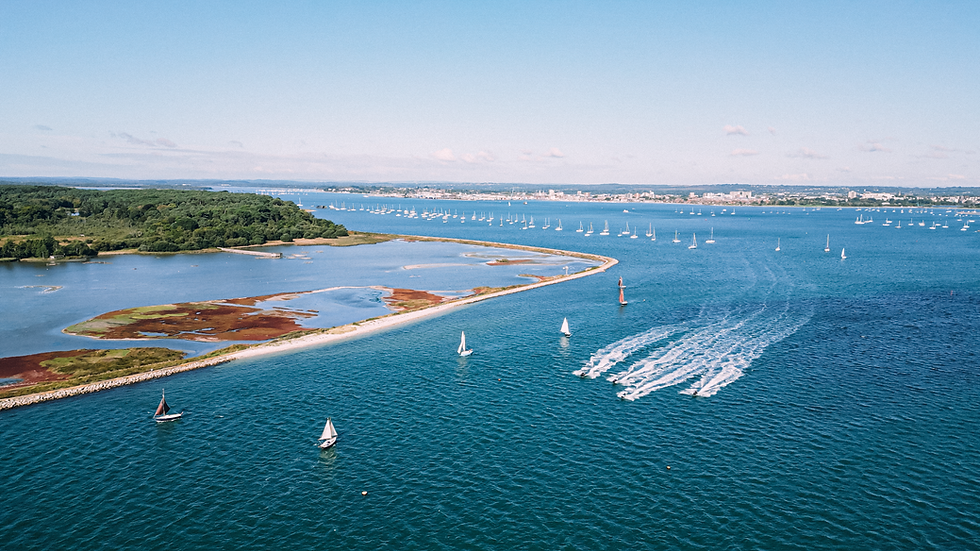
Many superyacht crew assume they need to qualify in Antibes or Palma because that is where they are based during the season. It is worth running the actual numbers before deciding.
A combined PWC proficiency and instructor package in Antibes costs approximately €1,100 before accommodation and living costs in one of the more expensive places on the French Riviera.
Poole is 90 minutes from Bournemouth Airport, with regular flights from Nice and Marseille. Our course fee is fully inclusive — jetski hire, equipment, everything.
For most crew comparing options properly, training in the UK is cheaper, the qualification is identical, and Poole Harbour is a potentially more demanding training environment than many Mediterranean venues may be. We have placed instructors on yachts in every major yachting region globally. The qualification travels. Where you trained does not appear on the certificate.
Frequently Asked Questions
I already hold a Yachtmaster — does that help? It demonstrates existing maritime competence, which is a positive starting point. However, the PWC Instructor qualification is a separate scheme and the prerequisite of the PWC Proficiency Certificate and riding experience still applies regardless of what other qualifications you hold. The good news is that candidates with strong existing seamanship tend to progress through the instructor course well.
I am already a qualified RYA Powerboat Instructor — can I do a shorter version of the course? Unfortunatley not, the RYA stopped running a conversion course from Powerboat Instructor to Personal Watercraft Instructor in 2023. Be mindful of this when booking your course with any companies that claim to still operate this course.
What is the difference between the RYA Introduction to PWC Safety Course and the Proficiency Course? The Introduction to PWC Safety Course is what a qualified instructor delivers to guests onboard a recognised training yacht. The Proficiency Course is the full one-day qualification required as a prerequisite for instructor training. They are entirely different qualifications.
Does New Wave Training deliver the instructor course onboard superyachts? Yes. If a yacht has a minimum of three crew who want to qualify, we can come to you, wherever you are moored. Contact us to discuss the specific requirements and logistics.
How do I book? Contact us directly at info@newwavetraining.co.uk or call 01202 028 031. Alternativley you can book online here.
Written by Ross, RYA PWC Trainer Principal at New Wave Training. Ross has trained RYA PWC Instructors since 2009 and has placed crew on superyachts including MY Breakthrough, MY Luminance, MY Kismet, MY Akula, and MY IJE. info@newwavetraining.co.uk | jetskiandpowerboattraining.co.uk


Comments